When Doing "Everything Right" Stop Being Enough
You aren't the person who needs to be told "eat less, move more." You already hit the gym. You track your nutrition with far more precision than most people could ever manage. And yet, that stubborn visceral fat around your midsection simply refuses to budge — not with strict calorie cuts, nor with doubling down on cardio.

Then comes the mid-afternoon energy crash. Coffee doesn't solve it anymore; it just masks the fatigue for an hour. And you start wondering if this is just "getting older" — or if there's something specific going on inside your metabolism that raw effort isn't fixing.
Spoiler: there almost certainly is. And it has nothing to do with willpower.
The Master Switch That Dictates Whether Your Body Burns Fat or Stores Fat
Inside your body lies an enzyme called AMPK — AMP-activated protein kinase, described in scientific literature as the human body's "master metabolic switch." When active, AMPK signals your body to prioritize burning fat for fuel and pull glucose into cells efficiently. When sub-activated — which becomes progressively more common with age, even in people who train hard and eat clean — your body defaults to fat-storage mode, particularly around visceral organs.

That is why two identical workout and meal plans can yield drastically different results in two different people — or in the exact same person at different stages of life. Mechanical effort (calories, training volume) still matters — but it operates on a underlying system whose "operating mode" must also be set correctly.
Optimizing your biomarkers isn't about pushing harder. It's about ensuring the metabolic system behind your effort is functioning as it should.
Why You Don't Want the Conventional Pharmaceutical Route for This
You've probably looked into GLP-1 receptor agonists or other pharmaceutical options for metabolic optimization. And you probably already know why you hesitated: steep monthly bills, GI distress, and a major hidden drawback — muscle tissue loss associated with rapid pharmaceutical weight drop, which runs directly counter to any serious longevity or physique goal.

Metformin, used off-label by some in the biohacking community for longevity, carries its own well-known tax: digestive discomfort and a rarely discussed issue — long-term use is tied to vitamin B12 malabsorption, a critical nutrient for long-term neurological health.
Nothing here constitutes medical advice for off-label drug use.
What you're likely looking for is a compound that triggers the right metabolic switch without sacrificing hard-earned muscle mass or dealing with systemic side effects.
Why This Compound Never Made It onto Conventional Longevity Radars

Berberine is a natural alkaloid extracted from plants used for over 2,000 years in traditional Asian medicine. Its modern metabolic rediscovery happened in the 1980s, when physicians in China treating gut infections noticed diabetic patients receiving the extract experienced steady, consistent drops in blood sugar — sparking decades of subsequent clinical research on its AMPK mechanism.
The reason it never became a standard Western longevity protocol isn't scientific — it's structural: as a natural plant compound, berberine cannot be patented. Without a patent, there is no financial model to justify the multi-million-dollar marketing pushes needed to position it alongside proprietary drugs.
For anyone who understands how financial incentives dictate which treatments receive clinical spotlights, this shouldn't be a surprise — it should be a reason to look deeper.
The Hard Data: Berberine vs. Metformin, Head-to-Head

In a controlled 13-week clinical trial published in the peer-reviewed journal Metabolism, researchers compared 1,500 mg of pure daily berberine against 1,500 mg of daily metformin in 36 adults:
| Marker Tested | Metformin | Berberine (VYTA) |
|---|---|---|
| HbA1c Reduction | -1.43 percentage points | -1.99 percentage points |
| Fasting Blood Glucose | -28.0% Reduction | -35.5% Reduction |
| Triglycerides | No significant change | -21.2% Reduction |
| Total Cholesterol | No significant change | -12.9% Reduction |
On blood sugar control, results were statistically equivalent (with berberine showing a slight numerical edge). On blood lipid profiles — critical for anyone tracking cardiovascular biomarkers as part of a longevity protocol — berberine significantly outperformed metformin.
What Those Numbers Actually Mean for You
A tie on blood sugar. A win on the markers tied to long-term heart and metabolic health. That's not a marginal difference — it's the kind of result that changes what a next lab visit could look like.
This is what led to VYTA Berberine: 1,500 mg per serving, standardized to 97% purity, third-party lab tested with a Certificate of Analysis available on usevyta.com. Made in the USA, in an NSF & GMP-certified facility. No fillers, no fake yellow powder — vegan, gluten-free, non-GMO.
What This Looks Like in Real Life
Real feedback, real results, from people navigating their own version of that same lab result.
"I track bloodwork quarterly. After 90 days on VYTA Berberine, my triglycerides dropped 22% and fasting glucose hit 84 mg/dL — without sacrificing any bench strength!"
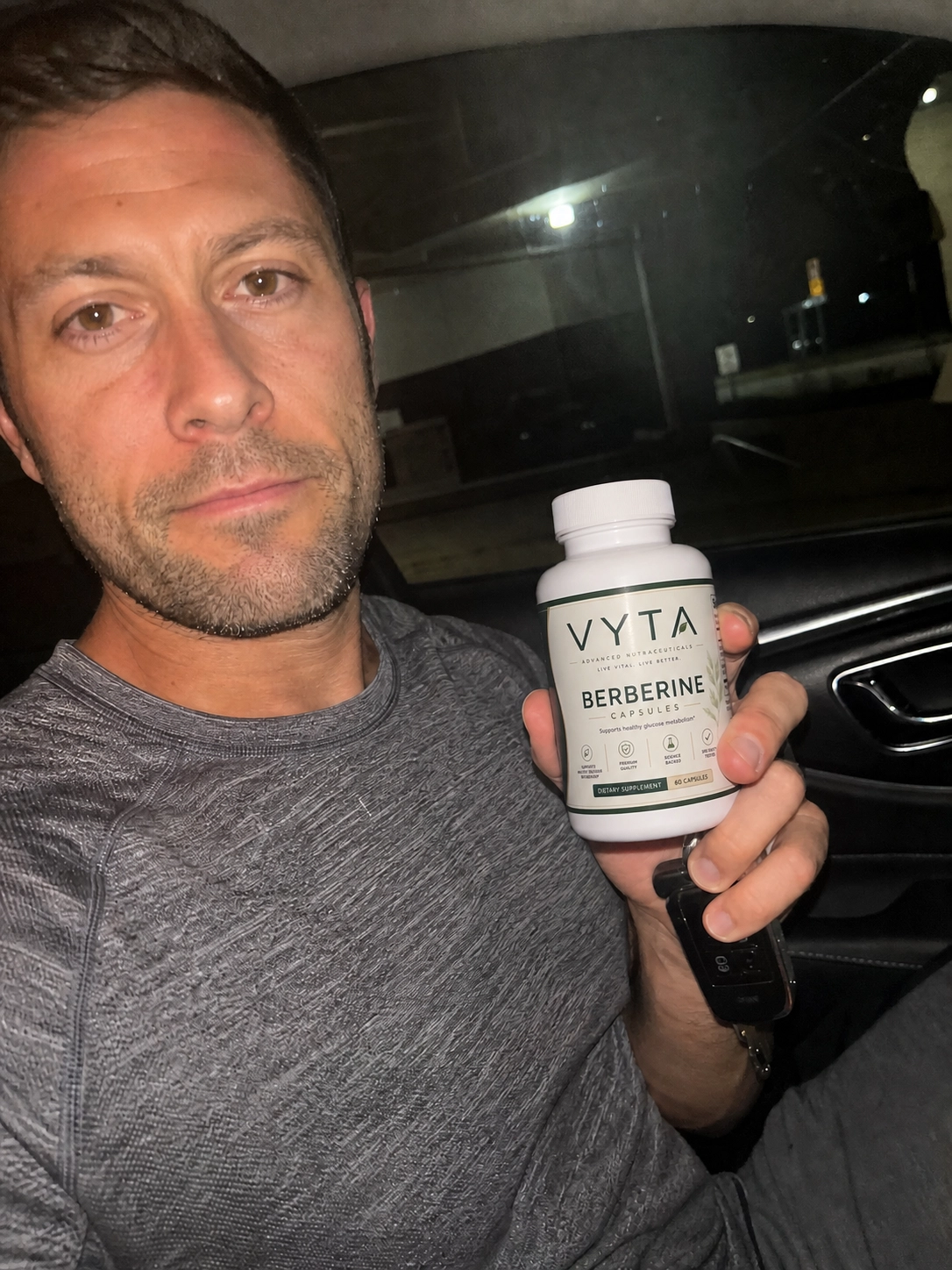
"My body fat was stuck at 16% despite strict cardio and calorie tracking. Activating AMPK with VYTA finally melted that lower abdominal layer while keeping vascularity."
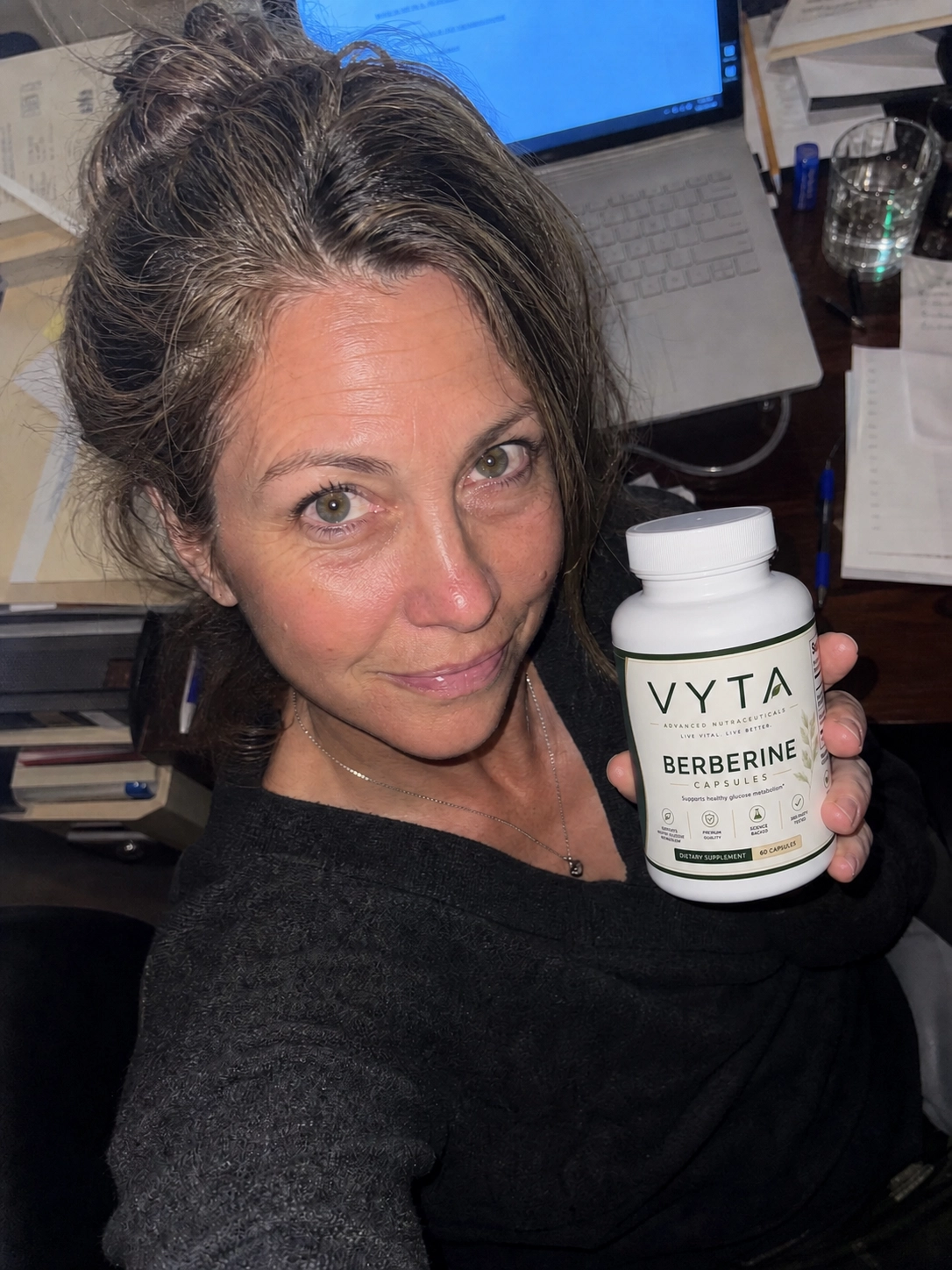
"I refused to take synthetic peptides that risk lean muscle loss. VYTA gives clean glucose uptake and sustained cellular energy without any GI distress."
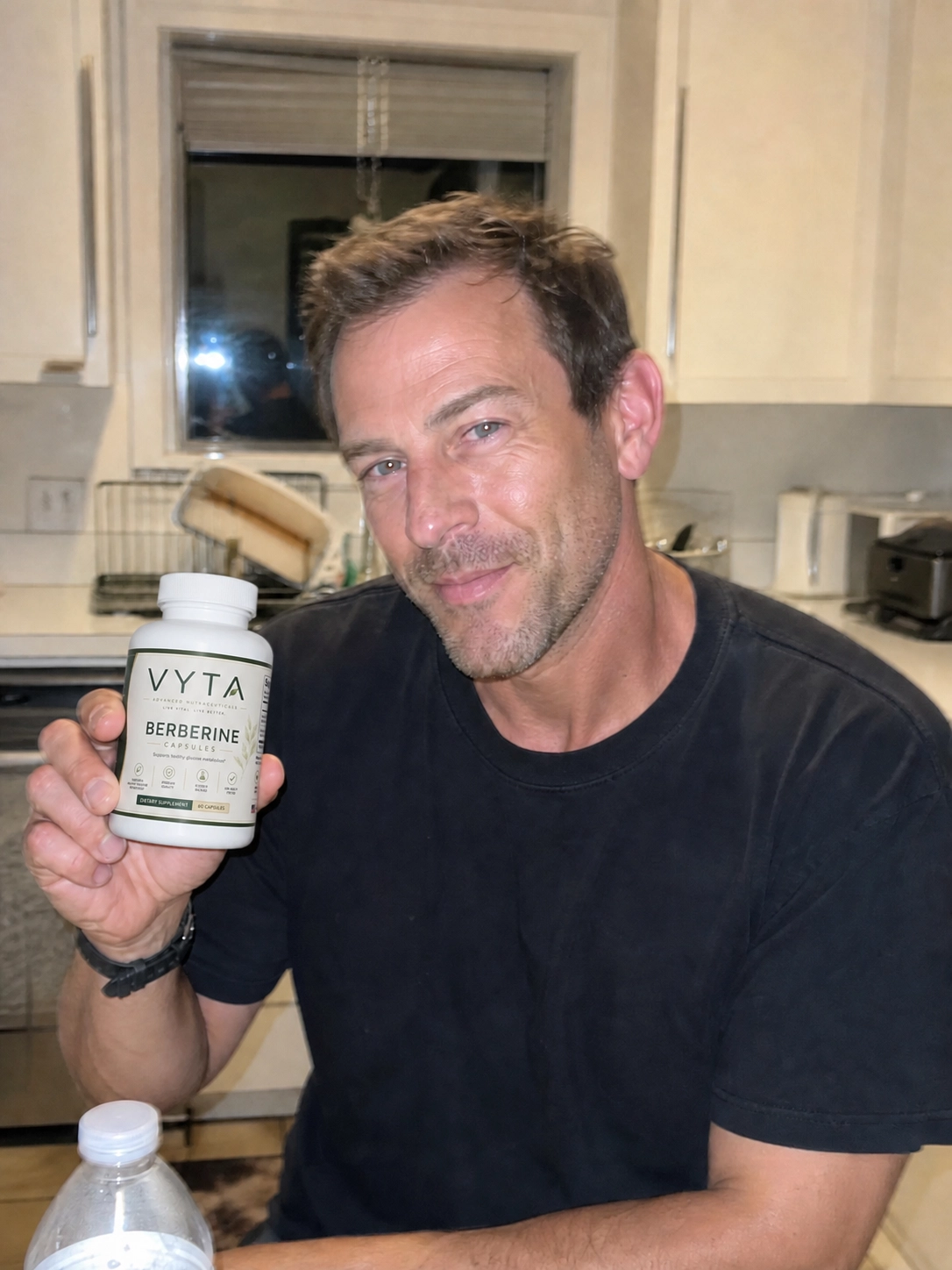
"My post-lunch energy used to drop off a cliff. Now my glucose stays smooth all day long, keeping me locked in through late afternoon workouts."

"Verified 97% purity and third-party COAs. It’s rare to find a supplement that actually delivers on its clinical promises. VYTA is a staple in my routine."
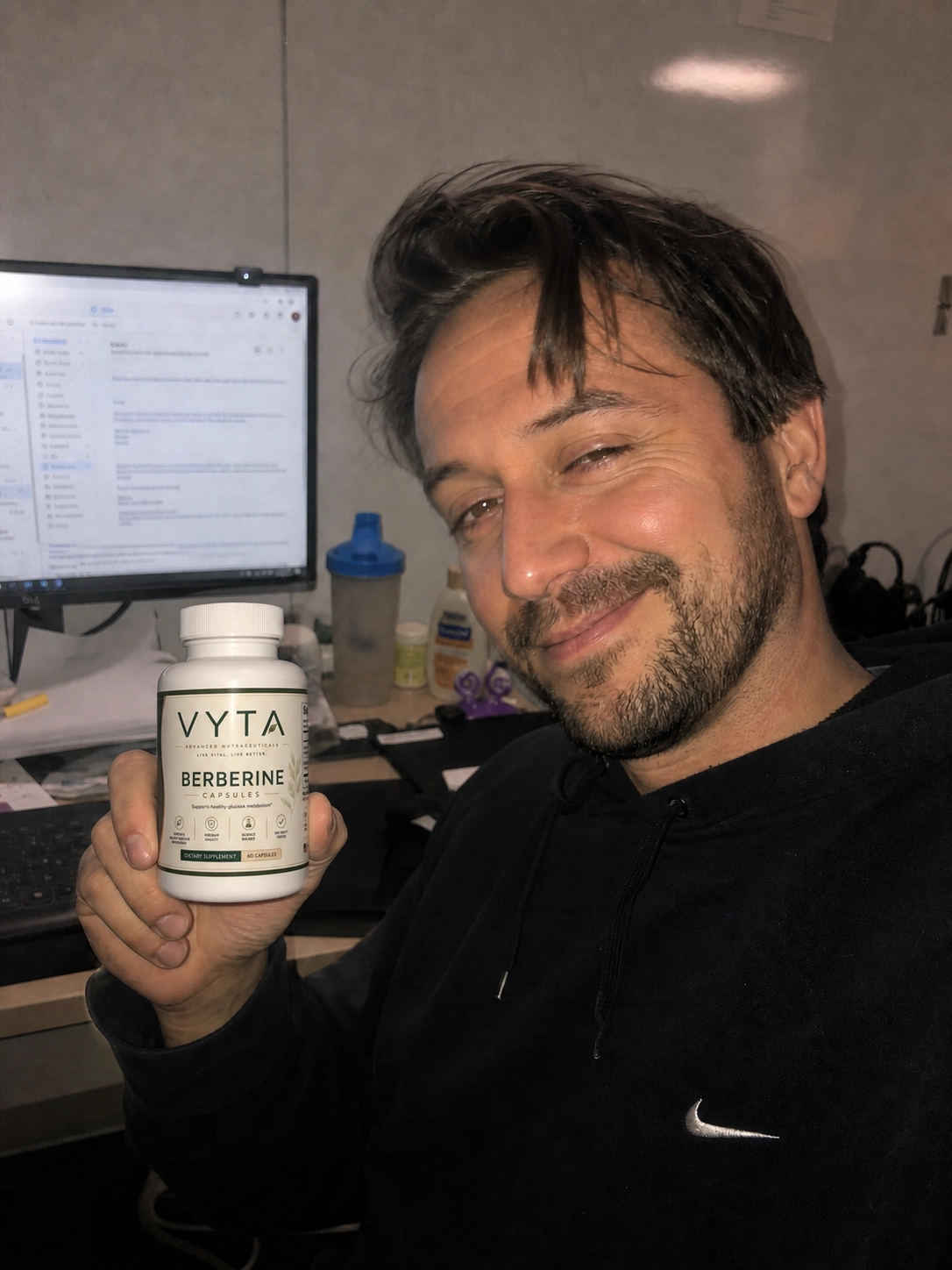
Where to Find Authentic 97% Pure Berberine HCl (And How Readers Can Secure the 90-Day Protocol)
Because clinical trials demonstrate that AMPK reactivation, cellular glucose uptake, and lipid markers build compounding momentum over 60 to 90 days, nutritionists and longevity specialists strongly recommend starting with the 90-Day Protocol.

The 90-Day Recommended Protocol (3-Bottle Batch)
Clinically recommended duration for full AMPK cellular activation and baseline lipid shift.
- 3 Full Bottles of VYTA Berberine HCl (1,500mg clinical dose per serving)
- INCLUDED FREE BONUS: The 5-Minute Glucose Protocol Digital Companion Guide
- FREE Express Shipping to all 50 U.S. States
- 100% Risk-Free Guarantee: Covered by our 60-Day Empty-Bottle Money-Back Guarantee